The Difference Between HR Advisor and HR Business Partners
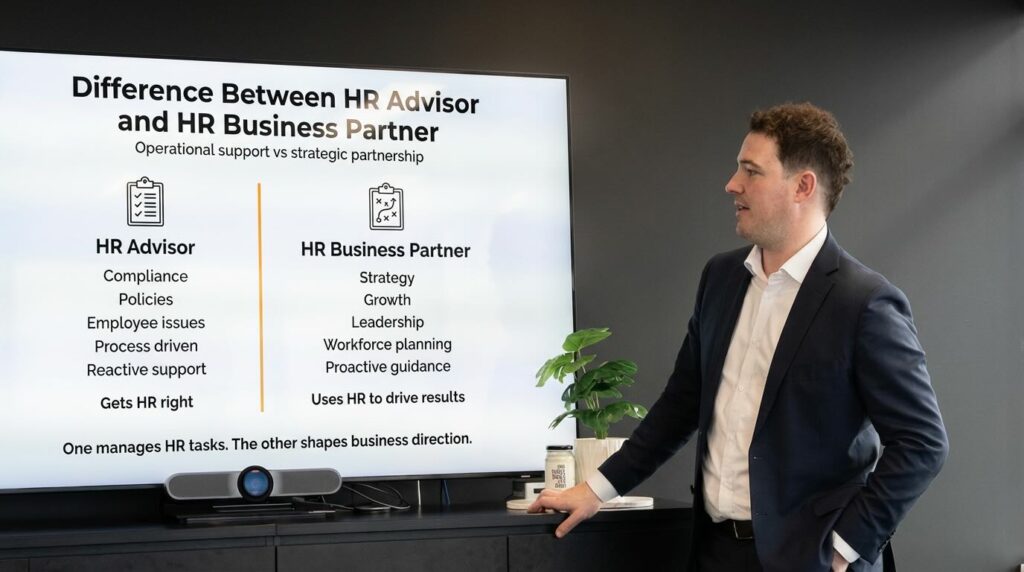
Understanding the difference between HR advisor and HR business partner is important for business owners, managers, and leadership teams who want the right level of people support at the right time.
Although both roles sit within human resources, they serve very different purposes. One focuses on guidance, compliance, and process. The other focuses on strategy, performance, and long term business outcomes.
This guide explains the difference clearly, using plain language and practical examples, so you can decide which role your business actually needs.
Quick Summary
- An HR advisor supports day to day HR matters and compliance.
- An HR business partner aligns people strategy with business goals.
- HR advisors are typically reactive and process focused.
- HR business partners are proactive and strategy driven.
- Smaller businesses often start with an HR advisor.
- Growing or complex businesses benefit from an HR business partner.
What Is an HR Advisor?
An HR advisor is a specialist who supports businesses with the operational side of human resources. Their role is to ensure people related decisions are handled correctly, fairly, and in line with employment law.
An HR advisor is usually engaged when a business needs clarity, guidance, or protection around HR processes.
Core Focus of an HR Advisor
The core focus of an HR advisor is risk management and compliance. Their work is centred on helping businesses avoid mistakes that could lead to disputes, penalties, or employee issues.
They focus on:
- Employment law obligations
- Workplace policies and procedures
- Correct process and documentation
- Fair and consistent treatment of employees
Common Tasks Handled by an HR Advisor
An HR advisor typically assists with:
- Employment contracts and contract updates
- HR policies and staff handbooks
- Awards, agreements, and Fair Work obligations
- Performance management processes
- Disciplinary procedures
- Termination and redundancy support
- Leave entitlements and employee rights
Practical example
If a manager asks, “Can I terminate this employee and what steps do I need to follow?”, that is an HR advisor task. The advisor explains the legal process, required documentation, and risks involved.
What Is an HR Business Partner?
An HR business partner operates at a more strategic level. Their role is to help the business use its people more effectively to achieve growth, stability, and long term success.
Rather than reacting to issues, an HR business partner works alongside leadership to plan ahead and shape the organisation.
Core Focus of an HR Business Partner
The core focus of an HR business partner is alignment between people strategy and business strategy.
They focus on:
- Business growth and scalability
- Workforce planning and capability
- Leadership development
- Organisational structure
- Culture and performance
Common Tasks Handled by an HR Business Partner
An HR business partner commonly supports:
- Workforce and succession planning
- Organisational design and role clarity
- Leadership coaching and development
- Employee engagement and retention strategies
- Performance frameworks linked to business goals
- Change management during growth or restructuring
- Using people data to support decision making
Practical Example
If a business owner asks, “We want to double revenue in three years, how should our team structure and leadership capability change?”, that is an HR business partner conversation.
The Key Differences Between HR Advisor And HR Business Partner
The difference between HR advisor and HR business partner comes down to mindset, scope, and impact.
| Comparison Area | HR Advisor | HR Business Partner |
|---|---|---|
| Operational Vs Strategic HR Support | Focuses on operational HR and immediate issues. | Focuses on long term people strategy. |
| Reactive Vs Proactive People Management | Responds when problems arise. | Anticipates challenges and plans ahead. |
| Compliance Vs Performance Focus | Ensures rules and processes are followed. | Uses HR to improve performance and results. |
| Role Focus | Day to day HR guidance. | Strategic business alignment. |
| Relationship With Leadership | Supports managers when needed. | Acts as a trusted partner to leadership. |
| Level Of Influence | Influences individual HR decisions. | Influences organisational direction. |
| Time Horizon | Short term and immediate. | Medium to long term. |
Which Role Does Your Business Need?
The right choice depends on your business size, structure, and growth plans.
When An HR Advisor Is The Right Fit
An HR advisor is usually sufficient when your business:
- Has a smaller or stable workforce
- Needs help with compliance and policies
- Experiences occasional people issues
- Does not yet require formal workforce planning
- Wants flexible, cost effective HR support
For many small businesses, an HR advisor provides essential protection and confidence.
When An HR Business Partner Adds Value
An HR business partner becomes valuable when your business:
- Is growing or scaling quickly
- Has multiple managers or departments
- Struggles with retention or leadership consistency
- Is undergoing change, restructure, or expansion
- Needs people decisions aligned with financial and operational goals
At this stage, HR becomes part of leadership strategy rather than a support function.
Can A Business Use Both Roles?
Yes. Many organisations use both.
A common approach is:
- HR advisor handling compliance and day to day issues
- HR business partner focusing on strategy, leadership, and growth
In smaller businesses, one senior HR professional may cover both roles, but the priorities and thinking remain distinct.
HR Advisor Vs HR Business Partner In Outsourced Models
Outsourced HR is increasingly common.
In an outsourced arrangement:
- An outsourced HR advisor provides on demand support for compliance and employee issues.
- An outsourced HR business partner works closely with owners or directors to support growth without the cost of a full time senior hire.
This model suits professional services firms and growing SMEs.
Why Understanding The Difference Matters
Not understanding the difference between HR advisor and HR business partner can lead to:
- Hiring the wrong level of support
- Paying for strategy when compliance is the real issue
- Missing growth opportunities due to poor people planning
- Increased risk from unmanaged HR decisions
Choosing the right role ensures HR supports the business rather than slowing it down.
Find Your HR Business Partner
An HR advisor helps you manage people correctly. An HR business partner helps you manage people strategically.
Both roles have value. The key is knowing which one your business needs now, and which one it will need next as it grows.
If you’re looking for an HR business partner, schedule your free strategy session with our business advisors in Perth today.